

Why Can I Feel Pressure on a Dental Implant if the Implant Has No Nerve?
I had a dental implant placed about a year ago. Everything healed well, and my dentist says the implant looks great. Here’s what confuses me. I was told an implant doesn’t have a nerve like a natural tooth does, but I can definitely tell when I’m biting on it. Sometimes I can even feel quite a bit of pressure. If there isn’t a nerve in the implant, what exactly am I feeling? Is this a sign that something is wrong?
Thanks,
David
Dear David,
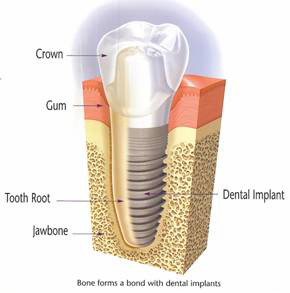
This is a fascinating question because you are correct about both things. A dental implant does not contain a nerve, and yet you can still feel pressure when you bite on it.
To understand why, it helps to look at the difference between a natural tooth and a dental implant.
Natural Tooth Versus Dental Implant
Your Natural Teeth Have a Built-In Sensory System
A natural tooth is not fused directly to your jawbone. Between the tooth root and surrounding bone is a very thin layer of connective tissue called the periodontal ligament.
That ligament helps support the tooth, but it also contains sensory receptors. These receptors give your brain remarkably detailed information about the forces being placed on a tooth. It is part of the reason you can notice something as tiny as a seed caught between your teeth.
A dental implant is different.
The implant integrates directly with the surrounding bone through a process called osseointegration. There is no periodontal ligament between the implant and bone. That means an implant does not provide precisely the same sensory feedback as a natural tooth. But that does not mean the area is numb.
Your Jaw Still Has Nerves
The bone, gum tissue, muscles, jaw joints, and other tissues surrounding your implant all have nerves. So, when you bite down on an implant crown, the force from your bite travels through the crown and implant into the surrounding bone. Your nervous system can detect those forces through nearby tissues. Researchers sometimes refer to this acquired sensory ability as osseoperception.
Your brain essentially learns to interpret information coming from the tissues around the implant rather than receiving exactly the same feedback it once received through a natural tooth’s periodontal ligament.
So being able to tell that you are chewing on your implant is not, by itself, an indication that something is wrong.
Pressure Versus Pain
So how do you know if something is wrong? What matters is the type of sensation you’re experiencing. Being aware of pressure when you bite can be perfectly normal. You’re aware of when you are biting down with your natural teeth. It may be just a matter of learning what the new sensation is because the nerve indication is coming from elsewhere.
Pain is a completely different story. If biting on the implant hurts, your implant suddenly feels different, the crown can feel like it’s moving, your gums are swollen, or you are developing other new symptoms, contact your dentist.
Another potential problem is the bite itself. If the implant crown contacts the opposing tooth too heavily, it can receive excessive biting forces.
Natural teeth have a tiny amount of movement because of their periodontal ligaments. An osseointegrated implant does not have that same cushioning system. That makes careful placement and management of the bite particularly important.
Dental Implants Should Feel Like Part of Your Mouth
One of the great advantages of dental implants is their stability. Rather than having a removable replacement resting on the gums, an implant-supported crown is anchored by the implant in the jaw.
Over time, many patients stop thinking much about which tooth is the implant.
So, David, the fact that you can perceive pressure does not mean your implant somehow grew a nerve. It means your nervous system is remarkably good at gathering information from the tissues surrounding it.
It’s important that you mention the sensation at your next appointment. If what you’re describing is actually discomfort rather than ordinary pressure awareness, your dentist or prosthodontist can evaluate the implant and your bite.
This blog is brought to you by caring Tucson prosthodontist Dr. Howard Steinberg.
Click here to learn about a full mouth reconstruction.